

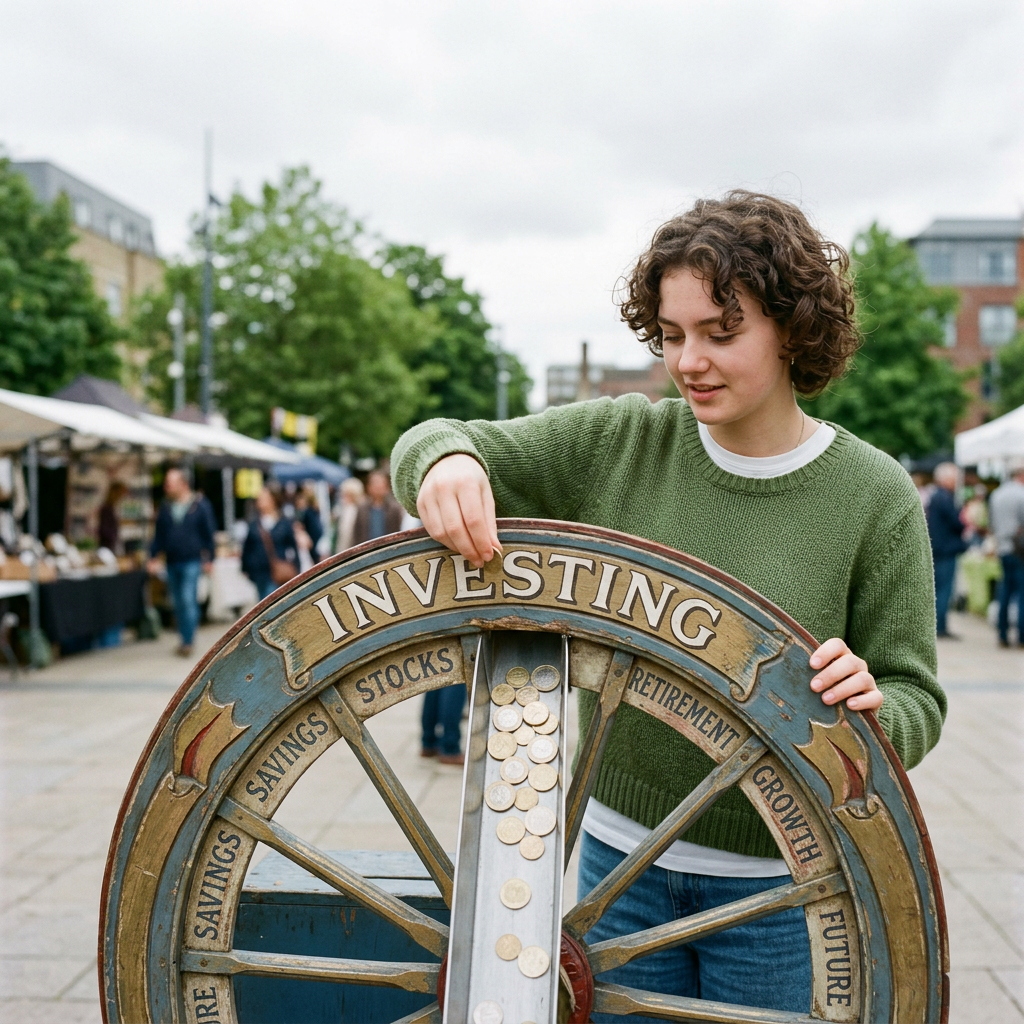
Maybe you’ve heard about friends investing and want to get started yourself. You’re looking for the basics to get going. Today we’ll talk about the basics of investing, including different types of investments you may wish to make, mechanics of setting up an investing account and making your first investments.
(Note, this site contains affiliate links. As an Amazon Associate I earn from qualifying purchases. When you click on an affiliate link and buy something, The Small Investor will get a small commission for the referral. You are charged nothing extra for the purchase. This helps keep The Small Investor going and free. I don’t recommend any products I do not fully support. If you would like to help but don’t see anything you need, feel free to visit Amazon through this link and buy whatever you wish. The Small Investor will get a small commission when you do, again at no cost to you.)
Before you can start investing, you need money to invest. Check out FIREd by Fifty: How to Create the Cash Flow You Need to Retire Early. You’ll learn how to control your cash flow so that you’ll have money to invest and grow wealth.

What is Investing?
The basic definition of investing is:
Putting money at risk in order to increase it.
But does it always mean that putting your money at risk will always increase it? Or that you’re likely to lose your money if you invest? If you’ve been on financial social media long, you’ve no doubt heard people saying things like stock investing is “gambling.” And if you use stocks in a certain way, it can indeed be gambling.
But investing is different from gambling in a very important way: With gambling, your chances of making money are less than your chances of losing money. Often far less. With investing, your chances of making money are far greater than your chances of losing money.
Going to a casino is gambling. If you’re playing things like slot machines and roulette, the odds are against you and you will lose money if you keep playing. Buying a casino is investing. The odds are in your favor with the games, so as long as you can get enough people in the door and gamble with their money, you’ll make money. Your risk is that you won’t get enough people there to cover the cost of the staff and the mortgage. You will always win at the games over time.
You can gamble in stocks if you put large percentage of your money into a small number of single stocks – stocks in one company. You can also gamble by trying to predict where the markets will go and buy and sell before they go up or down. Even if you’re spreading your money out over a large number of stocks, this is still gambling.
Investing is spreading your money out over a number of stocks and then holding them through up and down markets. Because markets are always going up long-term – over periods of years and decades – if you hold for long periods of time you are almost assured of seeing your money increase. But single stocks do not always go up with time. In fact, many companies go bankrupt eventually (or they get acquired by other companies). Because single stocks go bankrupt, but large parts of the economy do not go bankrupt, buying a large number of stocks makes it very unlikely that you’ll see a big loss if you hold for a long period of time.
The number of stocks you buy and the length of time you hold them both reduce your risk. Because of this, you can reduce the amount of time you need to hold and expect to see a profit if you buy more stocks and you can reduce the number of stocks you need to hold and expect to see a profit the longer you hold them. These is a limit to this. You can’t just buy one stock and think you’ll be OK if you hold for 50 years. Likewise, you can’t buy 10,000 stocks and expect to make a profit if you hold for one year. There are minimums to both the number of stocks you must buy and the length of time you must hold a position to be investing and get the odds in your favor.
For strategies for retirement investing and investing for all sorts of other purposes, check out my mini-book, Sample Mutual Fund Portfolios .

What are some examples of investments?
What kind of things can you invest in? Well, obviously we already mentioned single stocks. Most of the companies you’re familiar with are public companies, meaning they have stocks that trade on public exchanges. You can buy shares in these companies and become a partial owner. You could become an owner in Coal-Cola, Google, or Apple, for example.
Stocks have what is called a “ticker symbol,” which is a convenient way to look them up. The ticker for Apple is AAPL, for example. In the past there was a ticker tape that rich people would have in their offices that broadcast stock prices on a slip of paper. Ticker symbols were used to reduce the amount of paper needed. Even today you may see a list of stocks trading on a ticker at the top or bottom of a screen using ticker symbols. If you want to find Walmart’s stock price, you can also type “WMT” into a search engine and it will likely come up as one of the first entries.
Buying single stocks, as we said, can be risky. For this reason many people buy what are called “mutual funds.” This is where individuals pool their money together and have professional money managers use their money to buy several stocks for them and create a portfolio. Each investor gets a share of the portfolio, based on how much he/she invests, so if the portfolio of investments goes up, you make a profit. You also get a share of the money periodically paid out by the stocks in the pool, called a dividend. Mutual funds are sold by fund companies. Some of the big names are Vanguard, Fidelity, and Schwab. Mutual funds are typically bought through the fund company. You send money to them and they give you shares of the mutual fund. Sometimes you buy mutual funds from the fund company through a broker. A broker is a person able to trade stocks for you on an exchange. The company they work for is called a brokerage. Today you might put in orders through a web interface and not actually work with a broker.
The kinds of mutual fund you’ll mainly be interested in are called “Index funds.” They’ll normally have the word “Index” right in their name. An index is a group of stocks. Indexes were created to measure how some part of the market was doing. For example, the Dow Jones Industrial Average Index was created to measure how the biggest US industrial stocks were doing.
Today indexes are used as the basis for index funds, where an index fund buys the stocks in the index and that becomes the portfolio. One of the most popular indexes to buy a fund of is the S&P500 index. This is an index of large US stocks. Another popular one is the NASDAQ 100, which is 100 large US technology companies.
Exchange Traded Funds, or ETFs, are mutual funds that trade like stocks on an exchange. This means, like a stock, you would put in an order to buy a certain number of shares of the ETF. Rather than sending money into the mutual fund company, you would buy these shares from another person on the exchange. This is the advantage of ETFs – when you buy or sell shares, it has no effect on the investments in the ETF. The price of the ETF just goes up or down based on what you are willing to pay to buy shares of the ETF from another person.
Want to learn the secrets to investing and really turbocharge your returns? Check out the second book in The Small Investor series, Investing to Win. This book presents 40 years of investing experience. Someone starting with zero knowledge of investing and the stock market could take this book and learn all that they needed to invest and do well. It would also be useful to someone who has invested and traded stocks for a while but who is really not getting the kind of returns desired.

How do you get setup to invest?
The easiest way to invest is to buy mutual funds through a fund company. Here you would setup an account with Vanguard, Schwab, Fidelity, or a number of other fund companies. This takes about 15 minutes to do online. You would then send in cash to them to fund the account. You can also setup direct deposits from your bank account and start making regular deposits into the account. This is a good way to invest regularly and make sure you’re actually putting money away.
Once the account is setup and funded, you then use their webpage tools to buy shares of a mutual fund or a few mutual funds. Most funds have minimum investments, which is the minimum amount you can invest in the fund to start out, of say $3000, $5000, $10,000 or more. Once you’ve made an initial investment, you can typically send in whatever amount of money you wish to buy more shares of the fund. If you’re just starting to raise cash to invest, you’ll probably need to save up and buy into just one fund to start. Something like an S&P 500 fund or a Large-Cap fund is a good first choice for many people.
You can also setup a brokerage account through a broker like Robin Hood, Merrill Lynch, or Schwab. Some fund companies like Vanguard also allow you to place stock trades with them functioning as a brokerage. Once again, you setup an account and then use their webpage tools to buy shares. In this case, you might buy ETFs or individual stocks, but you may also be able to buy into mutual funds.

SmallIvy Book of Investing: Book1: Investing to Grow Wealthy
If you’re buying mutual funds, you simply indicate the amount of money you want to invest and which fund you want to buy into. The company will then issue shares to you the next business day at the closing price for the day.
If you’re buying individual stocks or ETFs, you’ll need to determine how many shares you want to buy. You then place a order for the shares. Here you can do a market order, where you get the stock at whatever price it trades at next, or as a limit order, where you set the maximum price you are willing to pay. If you use a market order you won’t know how much the shares will cost, although you’ll usually be able to make a pretty good guess based on where they traded last. If the shares cost more than the money you have in the account, you’ll need to send in more cash or sell something in the account to raise cash. If you put in a market order you’ll know how much you’ll pay but it may take a while to get the shares at the price you set.
Your investing questions are wanted. Please leave them in a comment.
Follow on Twitter to get news about new articles. @SmalllIvy
Disclaimer: This blog is not meant to give financial planning or tax advice. It gives general information on investment strategy, picking stocks, and generally managing money to build wealth. It is not a solicitation to buy or sell stocks or any security. Financial planning advice should be sought from a certified financial planner, which the author is not. Tax advice should be sought from a CPA. All investments involve risk and the reader as urged to consider risks carefully and seek the advice of experts if needed before investing.


